
If you’ve been looking into skin rejuvenation, you’ve almost definitely run into CO2 lasers. And if you’ve gone down the internet rabbit hole, you’ve probably also seen the scary side of the conversation, long recoveries, intense peeling, those dramatic day-by-day photos.
I get why people hesitate.
During consultations, one question shows up again and again: “I’ve heard the results are incredible, but is the downtime really that brutal?”
That’s a reasonable concern. For a long time, CO2 earned its name for a reason, it delivered big changes, and it also asked for a lot of recovery. So people started thinking CO2 only makes sense if you’re okay disappearing for weeks.
Here’s what’s changed: that assumption isn’t always true anymore.
The technology has matured, and what I enjoy most about this field is watching treatments get smarter. You can still get the advantages that made CO2 the long-time favorite, but now there’s more room to tailor the approach to your skin, your goals, and your real-life schedule.
Because, honestly, most people can’t take two weeks off from life just to heal.
Why CO2 Has Stayed the Gold Standard
This industry loves the next new thing. Every season there’s another “game changer,” another device everyone’s talking about.
I’m all for innovation, but CO2 has held its place for decades for one simple reason: it delivers.
Rather than only polishing the surface, CO2 nudges the skin to rebuild from the inside. The treatment creates tiny, controlled micro-channels in the skin, which is basically a signal to your body, “Start repairing.”
That repair phase is where the real magic happens.
As your skin heals, it ramps up collagen and elastin, the proteins tied to firmness, smoothness, bounce, and that overall healthy-looking texture.
I usually describe collagen as the scaffolding under the skin. When you’re younger, you’ve got plenty. With time, your body makes less, and that’s when fine lines stick around longer, the skin doesn’t feel as firm, and old acne scarring can look more obvious.
CO2 pushes the skin to start building again.
And I always remind clients of this: the treatment isn’t “over” when you walk out the door. Skin remodeling continues for weeks, sometimes months. That’s why improvements can keep showing up well after the peeling phase is done.
CO2 Isn’t One Single Treatment
This is a big misconception.
People hear “CO2 laser” and assume it’s one procedure with one recovery timeline.
It’s not.
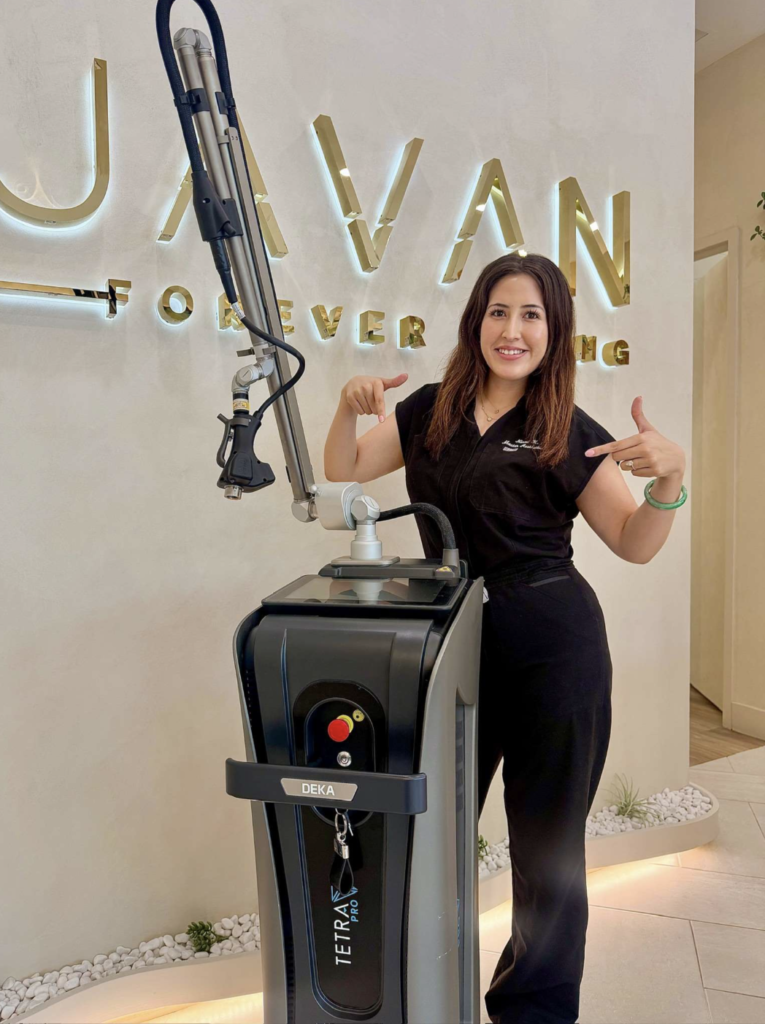
At Javan, we use the DEKA Tetra Pro CO2 laser, and one reason I’m genuinely excited about it is the range it gives us.
Skin isn’t one-size-fits-all.
Goals aren’t either.
And schedules, definitely not.
Some clients want a small, noticeable refresh before an event, a wedding, a trip.
Others come in wanting to soften acne scars they’ve had since their teens.
Some are focused on fine lines. Others are dealing with sun damage, texture changes, discoloration, or a mix of all of it.
They’re all “CO2 clients,” but their treatments might look completely different, and that’s exactly the point.
CoolPeel vs Traditional CO2: The Simple Difference
This is easily the question I hear most.
Here’s the cleanest way to think about it: it’s the same CO2 technology, but the intention and intensity are different.
CoolPeel is a lighter resurfacing option aimed at texture, fine lines, pores, and overall skin quality, while reducing unnecessary heat to the surrounding tissue. It’s a great fit if you want brighter, smoother skin without the big recovery you’d expect from traditional CO2.
A deeper CO2 resurfacing treatment is built for more advanced concerns, deeper wrinkles, more pronounced sun damage, more noticeable scarring. Because we’re doing more, the healing period is longer. And yes, the improvements can be more dramatic
too.
I don’t look at one as “better.” I look at them as different tools.
The right option is the one that matches your skin and your life. That’s why consultations matter. My goal isn’t to push the strongest thing we can do, it’s to recommend what gives you the best outcome while staying realistic about downtime, aftercare, and expectations.
What CO2 Can Help With
One of the reasons I keep coming back to CO2 is that it doesn’t only target one issue.
It can improve several things at once, such as:
- Fine lines and wrinkles
- Acne scarring
- Uneven texture
- Sun damage
- Age spots
- Enlarged pores
- Skin laxity
- Overall tone and brightness
And I say this often: healthy skin isn’t about looking “perfect.”
It’s about skin quality.
When your skin is smoother, stronger, and more even, everything else tends to look better too.
The Part Everyone Wants to Know: Downtime
I know this is what people scroll for. Recovery comes down to the exact treatment you choose.
With a lighter option like CoolPeel, you’ll usually see redness, a rough “sandpaper” feel, and then some peeling over the next few days.
With deeper CO2 resurfacing, you’re signing up for more healing time, more aftercare, and a bit more patience.
Neither experience is “bad,” they’re simply different levels of treatment.
This is also why I spend a lot of time talking through what to expect. I never want someone going home second-guessing every stage of healing.
Healing is part of the process.
Your skin is rebuilding, and that deserves as much attention as what happens in the treatment room.
And yes, I know peeling skin is hard to ignore.
Please don’t pick. Your skin really does know what it’s doing.
Is CO2 for Everyone?
Even though I love CO2, the honest answer is: no. And I think that’s worth saying out loud.
Your skin type, medical history, lifestyle, current skincare habits, and what you’re trying to accomplish all factor in. Sometimes CO2 is the clear best option.
Sometimes another treatment makes more sense.
That’s not a failure, it’s just good planning.
I don’t want anyone choosing a procedure because it’s trendy or because they saw a before-and-after online that made it look like a miracle.
The best treatment is the one that fits your skin.
Why Consultations Make the Difference
If you’ve ever sat with me before a treatment, you already know I ask a lot of questions.
Not because I’m being nosy, I promise.
I’m trying to map out the full picture: your skin, your habits, your goals.
Those details help me build a plan that’s actually personal, not generic.
I tell clients all the time: skincare isn’t one-size-fits-all, and lasers aren’t either.
Some of the best parts of my job happen before the laser ever turns on, because that’s where we figure out what makes sense together.
Final Thoughts
I became an aesthetician because I truly enjoy helping people feel more comfortable and confident in their skin.
I’m grateful we have options like the DEKA Tetra Pro that let us tailor treatments so much more than we used to. Still, great results aren’t only about a great device.
They come from education.
They come from trust.
They come from picking the right treatment, not just the strongest one.
And they come from having a provider who answers questions before, during, and after.
Whether you’re leaning toward something lighter like CoolPeel or you’re curious about deeper CO2 resurfacing, I want you leaving your consultation feeling clear, confident, and supported, not overwhelmed.
That’s always the goal.
Healthy skin doesn’t happen overnight. But with the right plan, consistency, and a little patience, the results really can be impressive.
Written by Naomi Higa, Master Aesthetician